Food History
The Antipasto Table
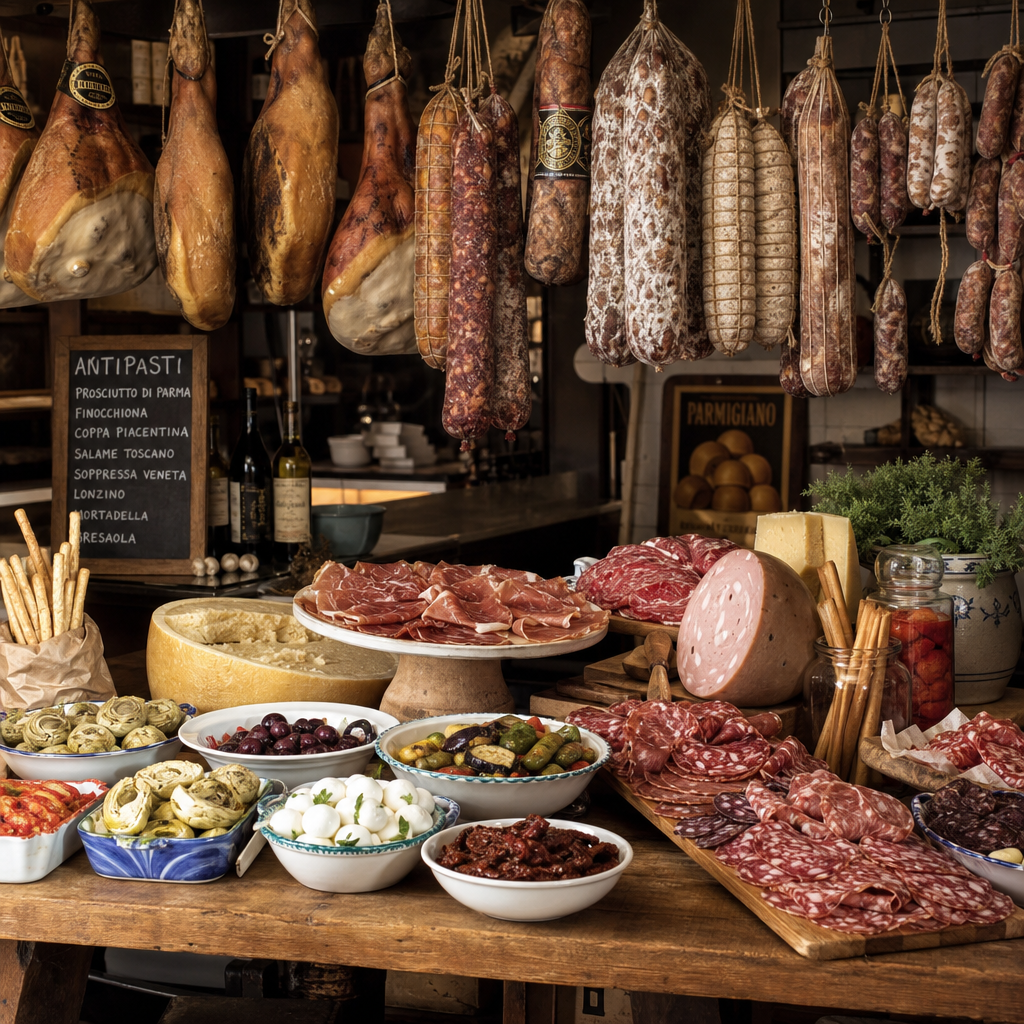
Antipasto means “before the meal.” The cured meats and aged cheeses that fill the board are there for practical reasons that go back a long way.
September 23, 2026 · Erika A. Cochran
In America the word often arrives as “antipasta,” said as though it were a pasta course that shows up early. It is not pasta. Antipasto means “before the meal” — pasto is the Italian word for meal, and antipasti is the plural. It is the food set out first, before anyone has properly sat down: sliced cured meats, aged cheese, olives, bread, whatever the pantry offers.
Its job is simple and important. There is something on the table while the rest of dinner is still finishing, so nobody hovers in the kitchen hungry. And once people are seated with a plate in front of them and wine poured, they stay. In my family, Ro’s wine was on the table every night — antipasto is the other half of that pace. The meal starts before the meal starts, and that is why nobody leaves early.
The board is not a random assortment, and it is not an appetizer course invented for restaurants. Everything on it is preserved food: meat made to keep through salt and time, cheese made the same way, olives cured in brine, peppers dried, bread baked to last the week. Antipasto is the household pantry, displayed. That is the real reason it is always those foods.
The cured meats come from the oldest problem in the kitchen. A pig was slaughtered in winter, and before refrigeration the family had one chance to turn it into food that would keep until the following year. Salt, air, smoke and hanging time did that work, and in Calabria the results are famous: soppressata, pancetta, ’nduja — the spicy, spreadable salami of the region. Ro cured meats at home, the way he made wine. As with the wine, I can tell you he did it and that it was part of how the household ate; the method itself was never written down, and I will not invent one.
The hard cheeses answer the same problem from the other side. Milk is one of the most perishable things a small farm produces — it has to become something else within hours or it is lost. Salt and age turn it into cheese that keeps for months. In the south that meant aged pecorino, provola, ricotta salata: cheeses hard enough to grate over pasta and sharp enough to season it. And where there was no cheese at all, toasted breadcrumbs took the job — that is pasta ca muddica, and it is on this site for exactly that reason.
That is why meat and cheese appear together on the board. They share salt as their common thread, they balance each other — rich against sharp — and they are both shelf-stable, which meant a household could put together a plate like this on an ordinary evening without going anywhere or cooking anything. Antipasto was never an indulgence. It was the pantry, arranged.
The rest of the board completes the picture. Olives cured in brine, dried sweet peppers — peperoni cruschi, crisp enough to crumble — and good bread are the garden and the field in the same preserved form. Nothing on the table is there for decoration.
You do not need a cellar to set this out now. A little good salami, a wedge of genuinely aged cheese, decent olives and honest bread will do it. The point is not abundance, and it is not the “charcuterie board” trend — it is the shape of the meal: a beginning that is generous with time rather than quantity, and that lets dinner arrive properly.
If you want to cook from that pantry the way this site means it, start with Fileja alla ’Nduja, where Calabria’s spicy salami becomes dinner; or Peperoni Cruschi and Olive Schiacciate, two preserved things that belong on the board. Venite a tavola.