Regional Recipe
Pane di Cuti
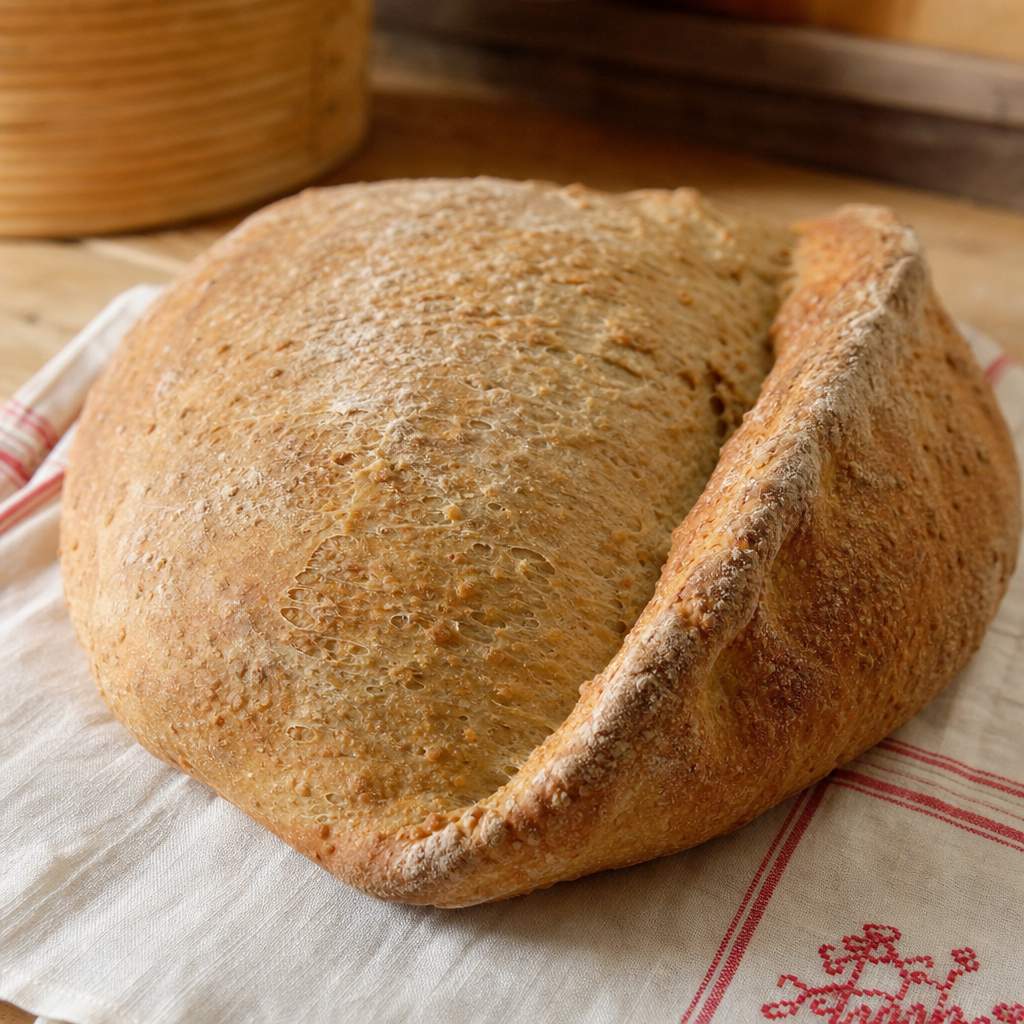
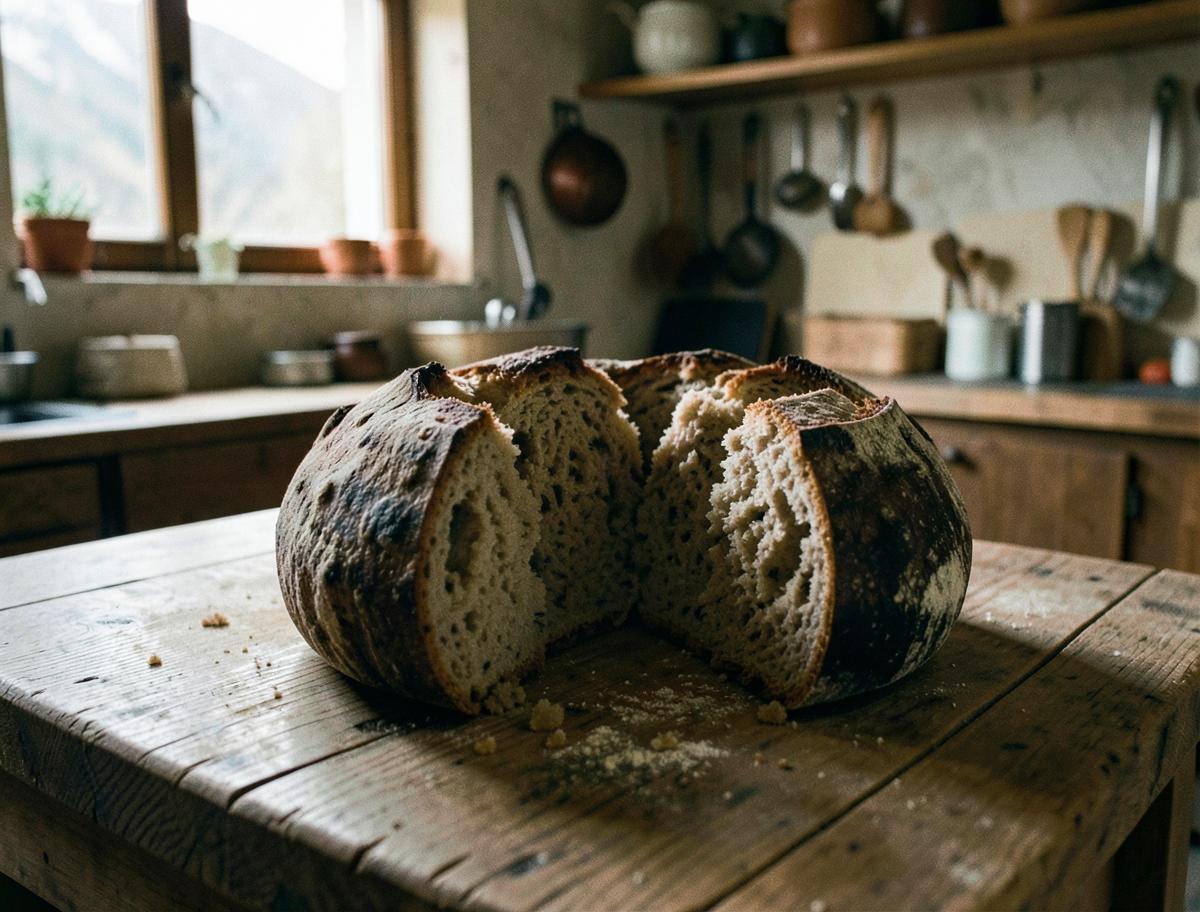
Wood-oven village loaf from the hills of Cosenza
This is a naturally leavened village loaf made with stone-ground flours and baked in a wood-fired oven.
Tested and written by Erika A. Cochran
Saved recipes live in the bookmark icon at the top of the page, on this device.
Prep
40 minutes, plus 10 hours rising
Cook
55 minutes
Serves
1 loaf (customary loaves are 1 or 2 kg)
Difficulty
Advanced
Region
Rogliano, Cosenza, Calabria
What you’ll need
Ingredients
Written for 1 loaf (customary loaves are 1 or 2 kg).
Showing quantities at 1× the original recipe.
- 4¾ cups Italian stone-ground type 0 flour
- 2⅓ cups Italian stone-ground type 1 flour
- 7 oz mother starter
- 2⅔ cups water
- 1 tbsp fine sea salt
At the stove
Instructions
Mix the flours and water and rest for 45 minutes.
Add the mother starter and salt and knead until smooth.
Rise for 5–6 hours, folding every 45 minutes for the first three hours.
Shape into a round and prove for 2 hours in a floured cloth.
Bake at 465°F with steam for 20 minutes, then at 385°F for 35 minutes.
Cool completely before cutting.
Recipe notes
A home adaptation. The bakery does not publish fermentation lengths or mixing ratios, so those are not reconstructed here as fact.
The documented ingredients are type 0 and type 1 Italian stone-ground flours, Sila water and the Cuti mother starter, baked over chestnut wood.
Provenance confidence: moderate to high. Customary 1- and 2-kg loaves are reported by a specialist food publication rather than a regulated specification.
Context
Pane di Cuti comes from Cuti, a district of Rogliano in the Province of Cosenza. The producer identifies the bread with the neighbourhood's artisan history and dates its current artisan production to 1985, describing more than thirty years of local baking and a mother starter carried across generations. That supports a continuation of local practice; it does not establish a medieval or ancient origin, and no public regulatory specification was located.
Sources: Panificio Cuti — Il pane di Rogliano: (opens in a new tab); Gambero Rosso — La vera storia del pane di Cuti: (opens in a new tab); Home adaptation by Casa Magnelli Kitchen
Keep cooking