Regional Recipe
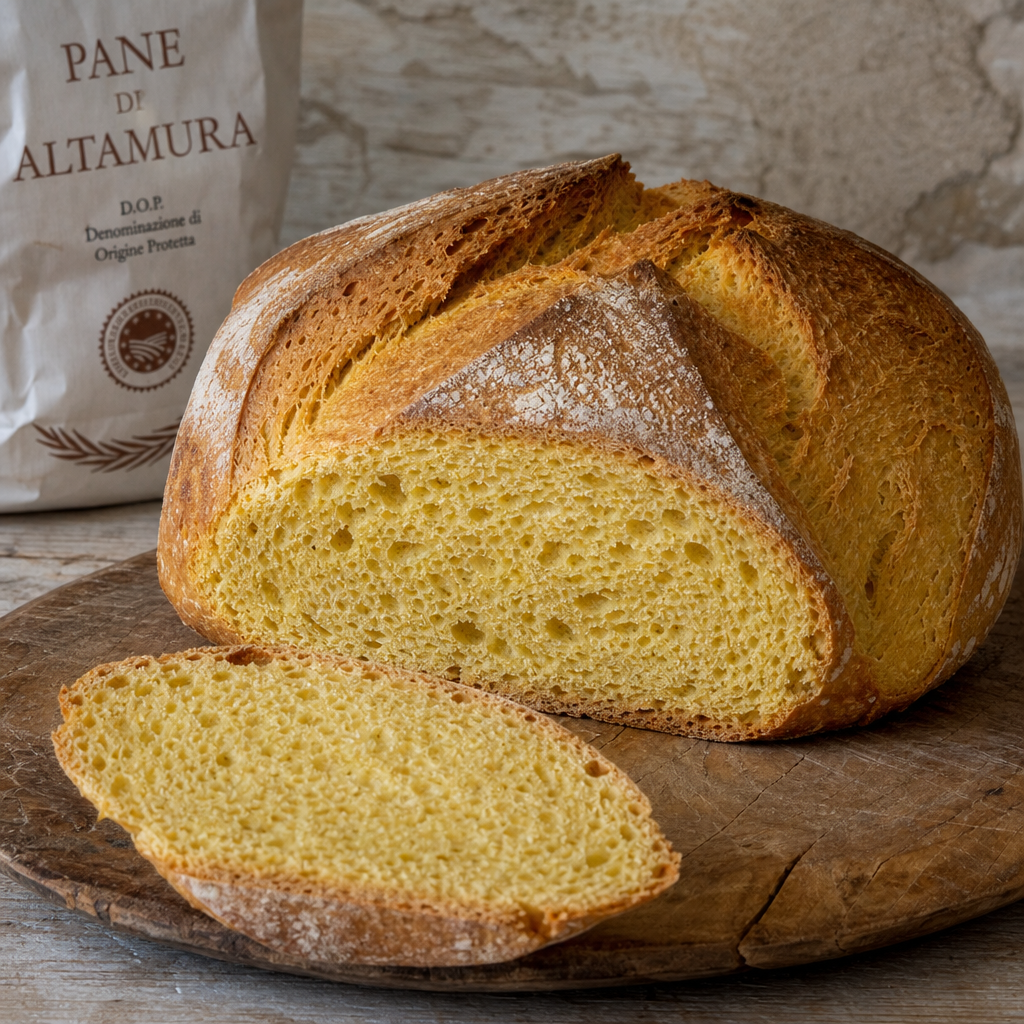
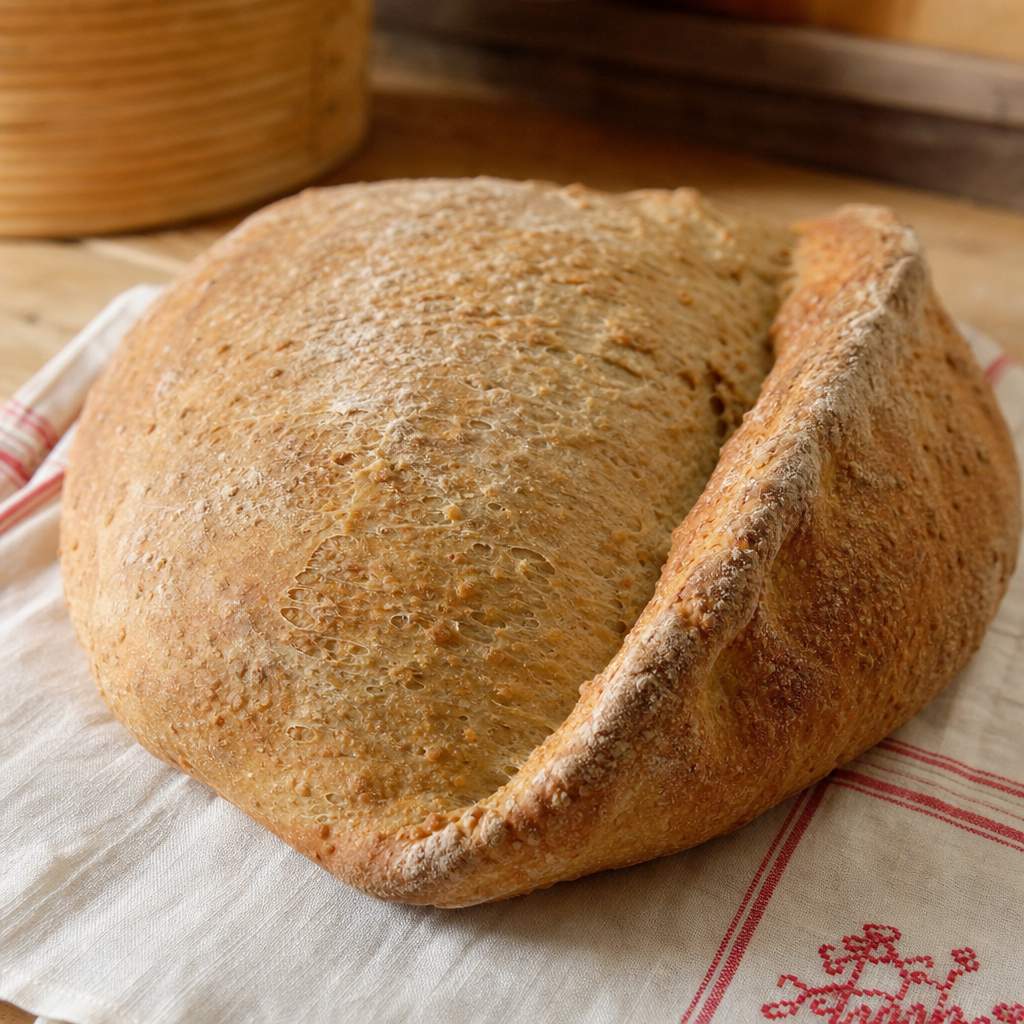
Pane di Matera Style Loaf
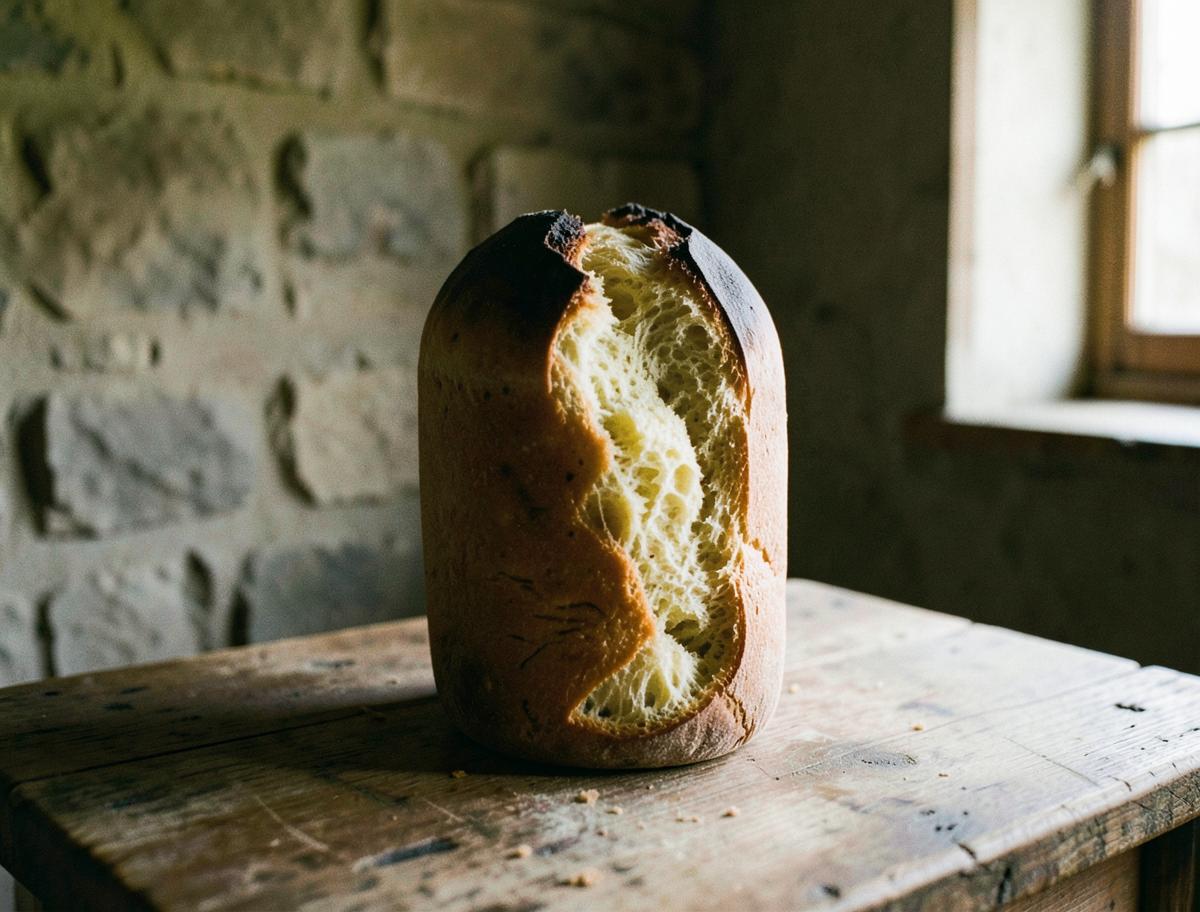
Tall horned semolina loaf from Basilicata
This is a tall durum semolina loaf with a distinctive horned shape, baked long so the crust sets thick.
Tested and written by Erika A. Cochran
Saved recipes live in the bookmark icon at the top of the page, on this device.
Prep
45 minutes, plus 8–10 hours rising
Cook
1 hour
Serves
1 large loaf (PGI loaves run 0.5–10 kg)
Difficulty
Advanced
Region
Province of Matera, Basilicata
What you’ll need
Ingredients
Written for 1 large loaf (PGI loaves run 0.5–10 kg).
Showing quantities at 1× the original recipe.
- 4¾ cups remilled durum semolina or semolato
- 7 oz mother starter
- 2⅔ cups water
- 1⅛ tbsp fine sea salt
- ⅛ oz fresh compressed yeast (optional; permitted by the specification)
At the stove
Instructions
Work the mother starter until it doubles in a few hours, refreshing it as needed.
Mix the final dough for 25–35 minutes, then bulk-ferment for 25–35 minutes.
Hand-preform the dough and rest it covered for 25–35 minutes.
Hand-form the characteristic loaf, rolling one end over to raise the horn.
Bake in a hot oven — at least one hour for a 1⅛ lb loaf, longer for larger ones — venting for the final 15 minutes.
Cool completely before cutting; the crumb sets as it cools.
Recipe notes
A home adaptation, not the PGI specification. That formula is 83–125 cups starter, 8⅓–13 cups salt, 317–359 cups water and 4–8 cups compressed yeast per 800 cups durum flour, with at least 20% of the flour from local ecotypes or old varieties (Cappelli, Duro Lucano, Capeiti, Appulo).
The specification reports keeping of up to seven days for a 1-kg loaf and up to 14 days for a 10-kg loaf.
Provenance confidence: very high, from the Ministry disciplinary document and the published EU summary.
Context
Pane di Matera is a PGI bread of the Province of Matera, with all production and packaging required inside the defined area. The specification describes an ancient system of Matera-area baking with historical evidence reaching back to the Kingdom of Naples and earlier, and the EU summary preserves the community-oven testimony: the shift from family or group ovens to public rock-cut ovens, where women brought home-made loaves identified by the household mark applied before baking. Finished loaves are stamped 'MT'.
Sources: Italian Ministry of Agriculture — Disciplinare di Produzione del Pane di Matera IGP; EU Official Journal — Pane di Matera PGI application summary: (opens in a new tab); Home adaptation by Casa Magnelli Kitchen
Keep cooking